Our biggest challenge and our greatest opportunity

ESSAY
Written by Dan Etheridge
Engagement Director, Living Lab Northern Rivers
Ask an urban designer, or any other professional who works in city building, 'What are the core elements of a thriving small city like ours?', I pretty much guarantee they'll say some variation of: a vibrant and active downtown core.
Historically, this has been one of Lismore's defining strengths. The built form of the central block sets the stage, with its uninterrupted awnings providing shade and shelter from the weather, to the internal laneways and the communal grandeur of the Quad, and the arts and culture institutions that surround it. The diverse, creative, and open-minded community innervate the streets, businesses and cultural organisations, while core services keep Lismore's beating heart thumping with life.
If you've done a lap of the block recently, you've seen our CBD is struggling. Some days it is vibrant and humming but on too many days its footpaths are empty, making the multiplying vacant shopfronts and tobacco shops come into tighter focus. It's a painful sight for the small businesses and organisations that call the CBD home and difficult for all of us wanting to live our lives in a thriving and dynamic place. It's particularly heartbreaking for those of us who can recall the CBD in its bustling days.
The question then is: what can we do about it? We understand the causes all too well, and I would simplify them into two categories. The first is common in regional centres all across our state – the rise of available online services and shopping, and the relocation of larger businesses to town fringes. This has dropped demand for space, and reduced the need to come to the CBD to do certain tasks. The second is unique to our town and that's the ongoing exposure to future flooding. In many ways, this is more challenging as it impacts core business needs, such as access to insurance and confidence to trade without serious disruption.
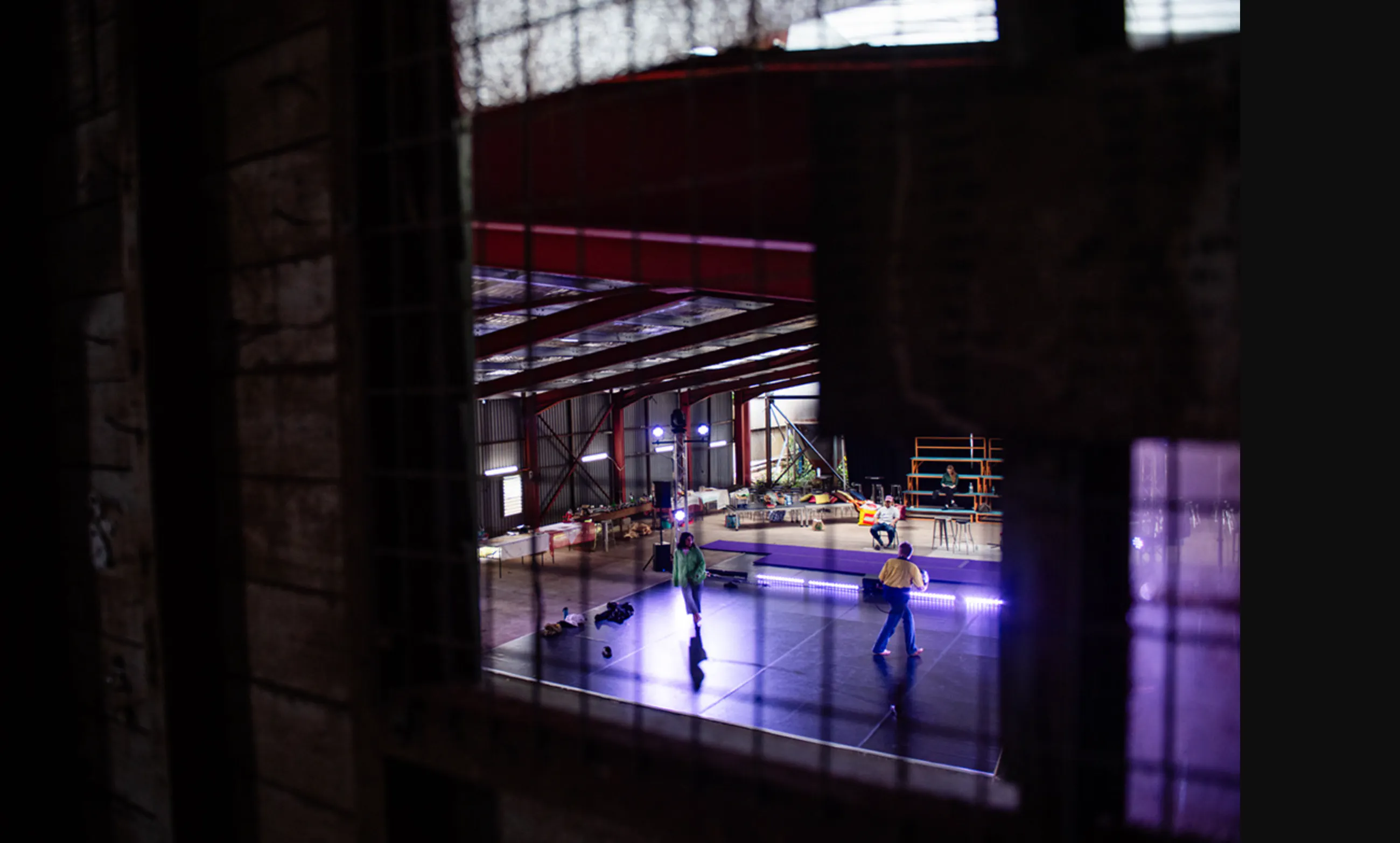
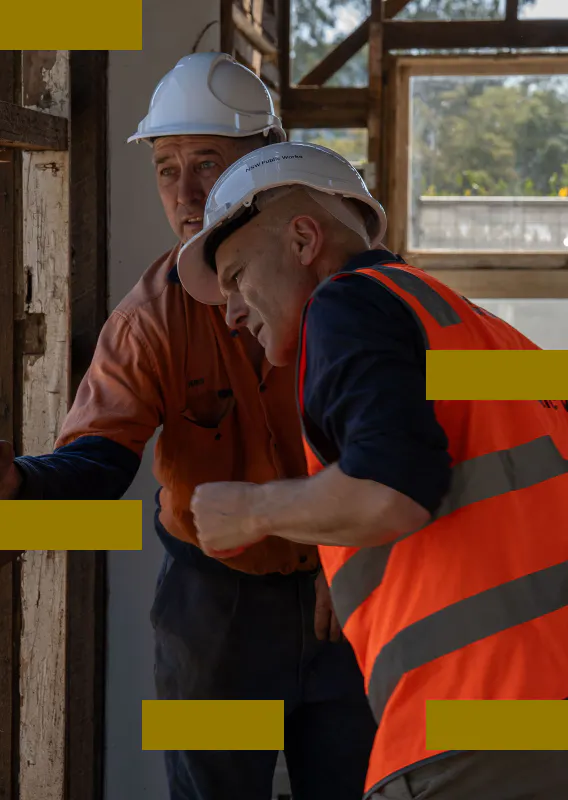
Inside The Joinery, part of the transformation that is happening to the Hampton & Larson joinery building in Lismore's CBD. NORPA is working with Choi Studio to reimagine this space as a flood-resilient world-class arts hub. Image by Elise Derwin.
As we have seen since the 2022 floods, this hasn't deterred everyone, with many pre-existing businesses cleaning themselves up and reopening, and plenty of new businesses seeing an opportunity in the Lismore CBD and jumping on it. But there are still too many empty shopfronts and not enough people pounding the pavement as they enjoy the magic our wonderful city has to offer.
So, back to my question – what can we do about it? I've spent a lot of time thinking about this, and through my work with Living Lab Northern Rivers (LLNR), I have asked a lot of people, businesses and organisations this exact question. As I look to our future, I see so many great opportunities. The ones that excite me most rely on us leaning into our maverick spirit (it's served us well up until now!) and thinking differently about how our vibrant downtown core might look and work.
Before I describe my ideas, I want to let you in on some of the thinking that has helped me in this process. My good friend and colleague, Craig Allchin, really deserves some credit for framing this up. Craig runs Six Degrees Urban and has advised on issues of urban design, planning and development across the world. He was also one of the generous experts who volunteered their time for the Look Ahead: Community Design for Lismore project run by LLNR in 2024.
In one of our design workshops for this project, Craig described how Marion Mahony Griffin and Walter Burley Griffin – who most famously designed Canberra over 100 years ago – developed a design process that sought to turn any project's greatest challenge into its greatest opportunity. This was not incremental problem solving; it was using creativity to look at a situation completely differently to see in its biggest challenge the chance to do something special. Doesn't that sound exciting? Doesn't that sound like Lismore? This is how we should be looking at the future of the Lismore CBD.
To create a path forward for a truly thriving CBD, we must look beyond the usual development playbooks: mixed-use buildings, additional residential development, etc. We must think creatively about how to best create the conditions for business and service organisations to choose Lismore.
So, how do we turn flooding into something special? Our biggest challenge can push us to set up something different to other places. While we cannot claim to have accessible insurance, and you will need to have well-honed evacuation procedures, we can offer you a wonderful diversity of spaces for your enterprise, an enthusiastic community with a long history of supporting local business, a truly beautiful built fabric, and perhaps most practically, an affordable entry point to commercial real estate that eliminates opportunity in most other places.
I am actually proposing we go a few steps further than just "looking beyond the usual development playbooks". I believe we shouldn't allow any more residential development than we already have in the CBD. We should change the zoning to something that looks more like an arts/light industrial land use to allow for noise – especially live music – and encourage enterprise that makes, builds and creates things.
For those of you that think this is a bit extreme, I say that Lismore attempting to lure new business and investment into town with a pitch that is basically our version of what everyone else is doing is fantasy. The challenges that hinder that generic sales pitch are the very same that could create opportunities for us to offer something genuinely unique. Something that can deliver a vibrant and thriving CBD unlike any other in the state.
Imagine we have collectively made the cognitive shift to pursue a different strategy for our CBD. One that diverges from the dominant market-driven NSW planning portal-generated path. How do we start to build it? We have all the pieces we need right here: Lismore Cinema and its innovative industry-focused capabilities for film and sound production; the recent visibility of Lismore's thriving live music scene, thanks to the brief tenure of the incredible Blah Bar; and the many Lismore Council supported events, including last year's Laneways of Lismore Festival and my favourite collision of two such events when Echo Locator in the Quad happened against the backdrop of Eat the Street 2025.
The recent occupation of the Living School's Brown and Jolly site by students and teachers is competing for the most exciting development in this space with NORPA's recent initial phase of works at The Joinery. Neither of these initiatives are typical of standard CBD development and both offer the kind of activation and life affirmation we so dearly need. Both projects are in the early stages of building out their full visions, so there is plenty more to come.

Lismore's laneways in the CBD. Image by Elise Derwin.
So, where do we go from here? For us to embrace this opportunity, I believe we need to work on two fronts concurrently. The first is continuing to innovate in all the ways described above. People who see the opportunity to use a space for their idea need to jump on it. There is no substitute for people with an idea, a willingness to work hard and the passion to bring it to life.
The second requires government intervention and involves adjusting some of the existing regulations about what activities are allowed and not allowed in the CBD. This could take the form of rezoning, or it could involve some adjustment of the permissible uses in the existing zoning. The NSW government's Special Activation Precinct program is worth a closer look here to see if it can deliver in our circumstances.
As tempting as it is to finish up looking at nothing but blue skies, it would be wrong not to circle back to those challenges. None of this thinking removes our most significant threat – flooding. All projects in the CBD must engage with best practice around being prepared for floods, and in that regard, we have much to offer. Resilient Lismore and Business Lismore have done incredible work developing tools to support simple and effective flood plans. LLNR made four short videos to highlight some of the innovative work done to make buildings and shops more resilient through flood-smart building practices. In my experience, our CBD operators are very generous with their knowledge, and we need them to share it openly to increase resilience for the entire CBD.
I want to acknowledge everyone who participated in the Look Ahead project, through which much of this thinking was developed. I encourage all those who've not yet done so to take a look at the proposals for Lismore, which emerged from the process. Like all ideas, those shared here will be infinitely improved by dialogue and testing, and this is happening in some circles already. I strongly encourage everyone who thinks about our CBD to engage in the Lismore Precinct Planning process that has just started. Any type of bold action will surely need strong public engagement and this process is an opportunity to bring this boldness. In the meantime, I'm choosing to believe in a CBD, not just as a place that is defined by flooding, but as a place that has something new to offer – something that can't be found anywhere else.
Our biggest challenge and our greatest opportunity
This essay was commissioned by Arts Northern Rivers. It draws on the Look Ahead: Community Design for Lismore project delivered by Living Lab Northern Rivers.

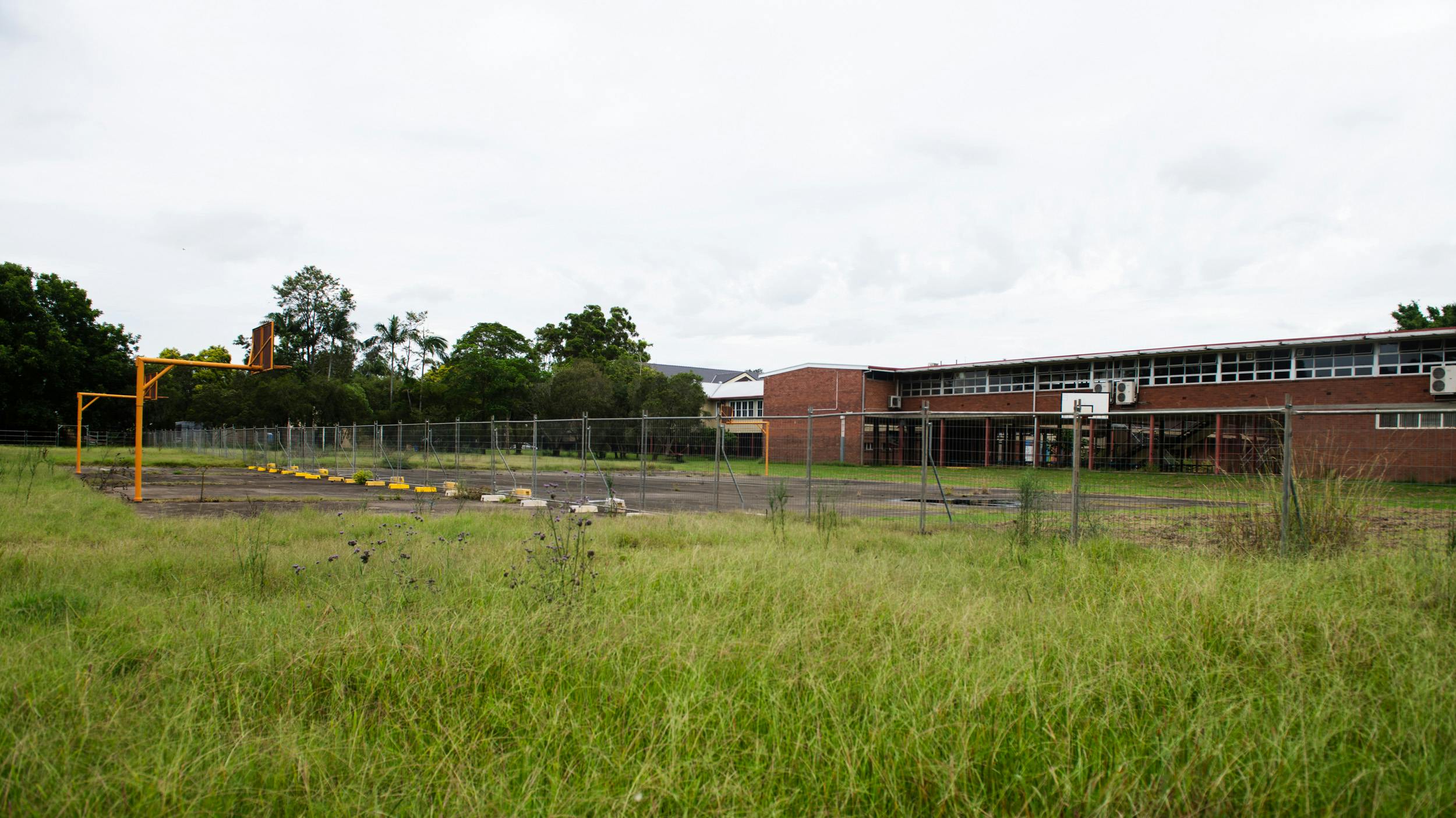
The former Richmond River High School site in North Lismore. Image by Elise Derwin.