Living Memory South Murwillumbah
Project
Environmental history
Flood preparedness
For many of us living in the Northern Rivers region, floods have been the foremost natural hazard. Increasingly, responses to natural disasters are shifting from recovery to long-term, knowledge-driven preparation. This requires grappling with the interwoven histories of people and place — environmental histories that can help build safer, more resilient futures.
The Tweed River has always flooded. But there have been lengthy periods without big flood events. When they don't come for a while, our memory of them starts to fade, along with the local knowledge and experience learned from them. New residents arrive without the local knowledge older residents built through direct experience. Kids grow up without experiencing the stories told. How do you hold onto that knowledge, and put it to use?
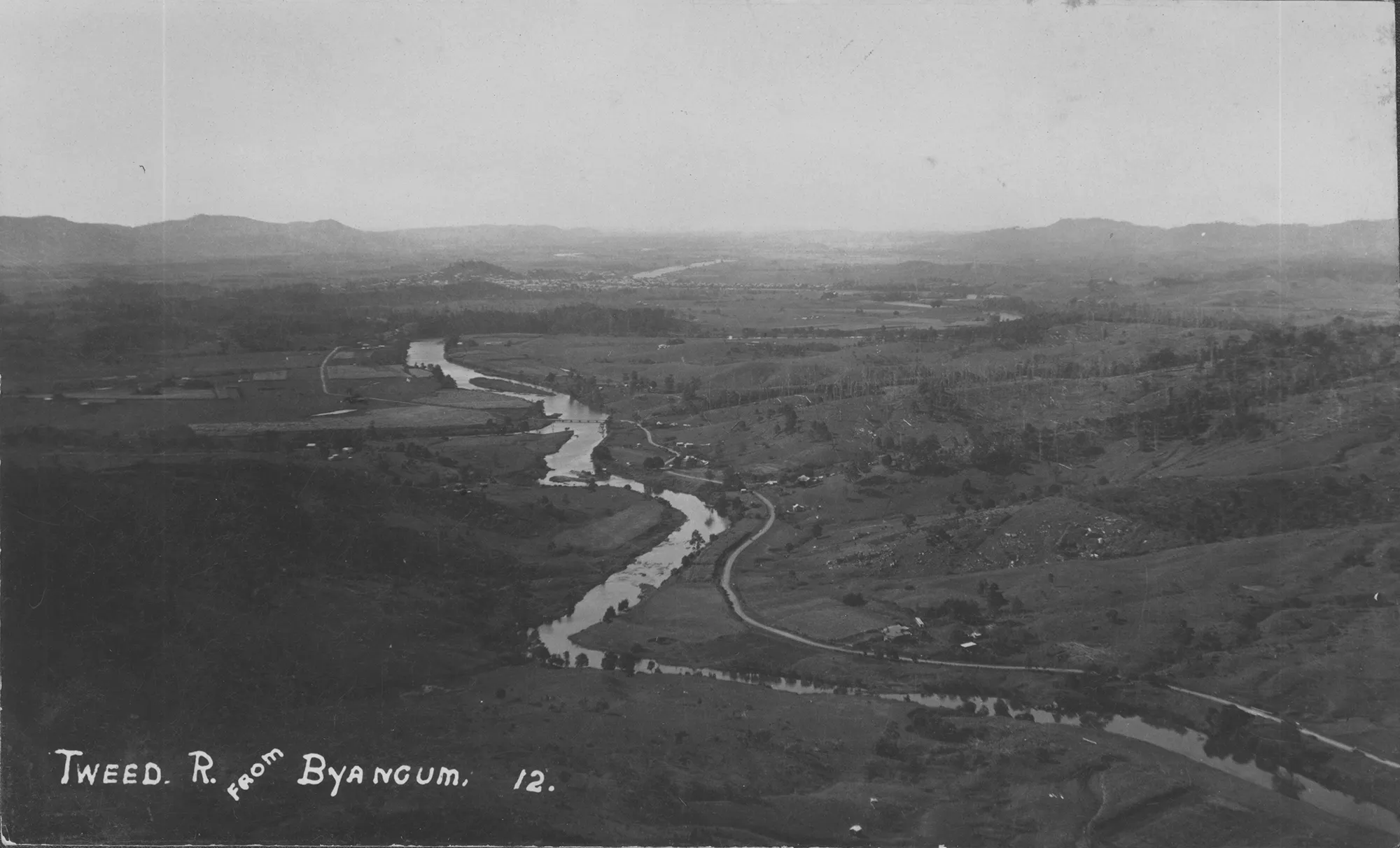
The Tweed River meandering downstream from Byangum towards Murwillumbah, c1920. Image courtesy of Tweed Regional Museum.
Until now, no accessible environmental history has existed that brings together the stories of South Murwillumbah and its people. As part of this project, historian Jo Kijas has addressed that gap, weaving together archival material and the knowledge held by South Murwillumbah residents themselves.
Living Memory South Murwillumbah brings local flood knowledge together with the official and historical record of this place.
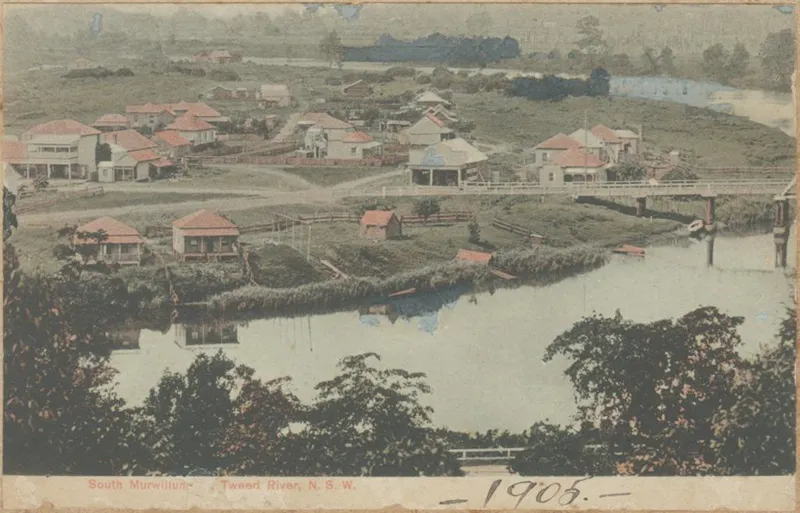
South Murwillumbah 1905. Holston’s Furniture Emporium can be seen on Prospero Street in front of the bridge. Image courtesy of Tweed Regional Museum.
Locating South Murwillumbah
South Murwillumbah sits on the southern bank of the Tweed River, directly across from the main town of Murwillumbah in the Tweed River flood basin.
The Tweed begins in the caldera of an ancient shield volcano. The fast-running streams that cascade off the steep sides join to form the three arms of the Tweed system. These are the Rous River or North Arm meeting the main river at Tumbulgum; the Oxley River, Mid or Central Arm that joins the main Tweed River, or the South Arm, just above Murwillumbah at Byangum. This is the system in flood that particularly impacts South Murwillumbah.
The South Side, as it is often known locally, developed later and more slowly than the main town. And there was something that bound all these South Side dwellers together—floods.
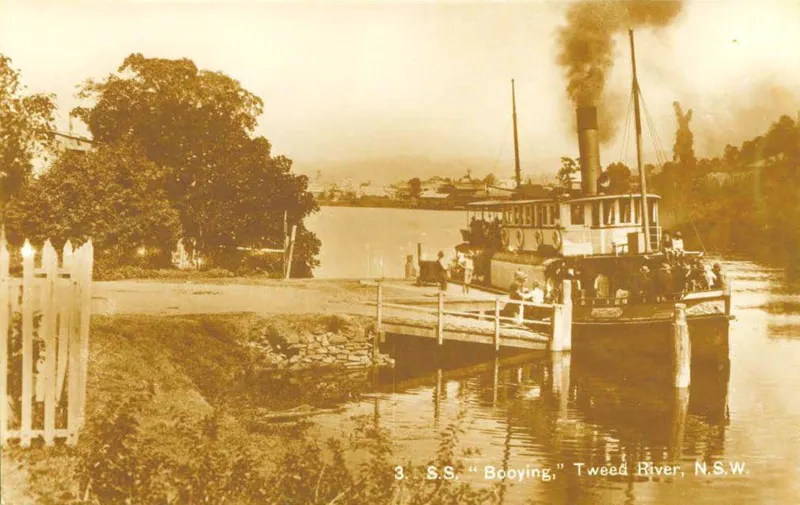
SS Booyung at South Murwillumbah wharf, heading downstream c1900.
Image courtesy of Tweed Regional Museum.
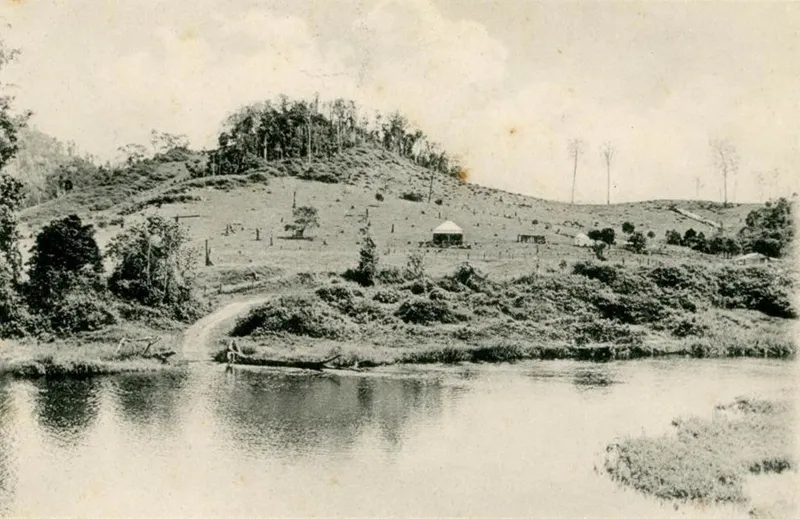
Byangum crossing c1915. Image courtesy of Tweed Regional Museum.
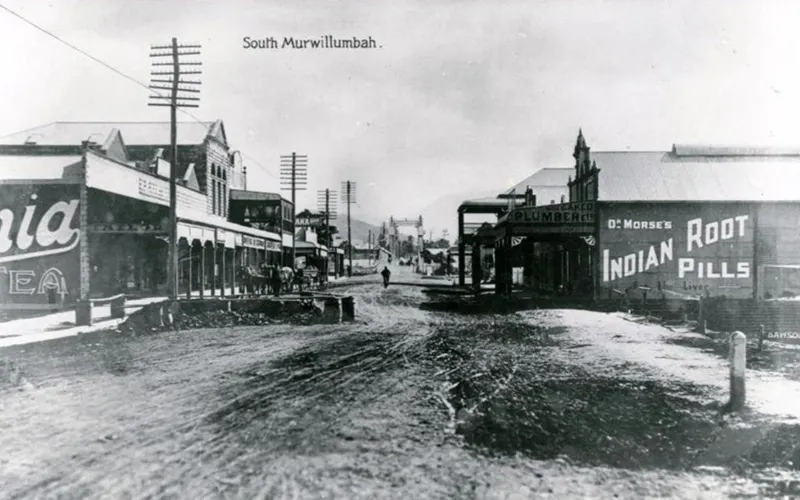
Prospero Street looking towards the bridge, c1905.
Image courtesy of Tweed Regional Museum.
An environmental history
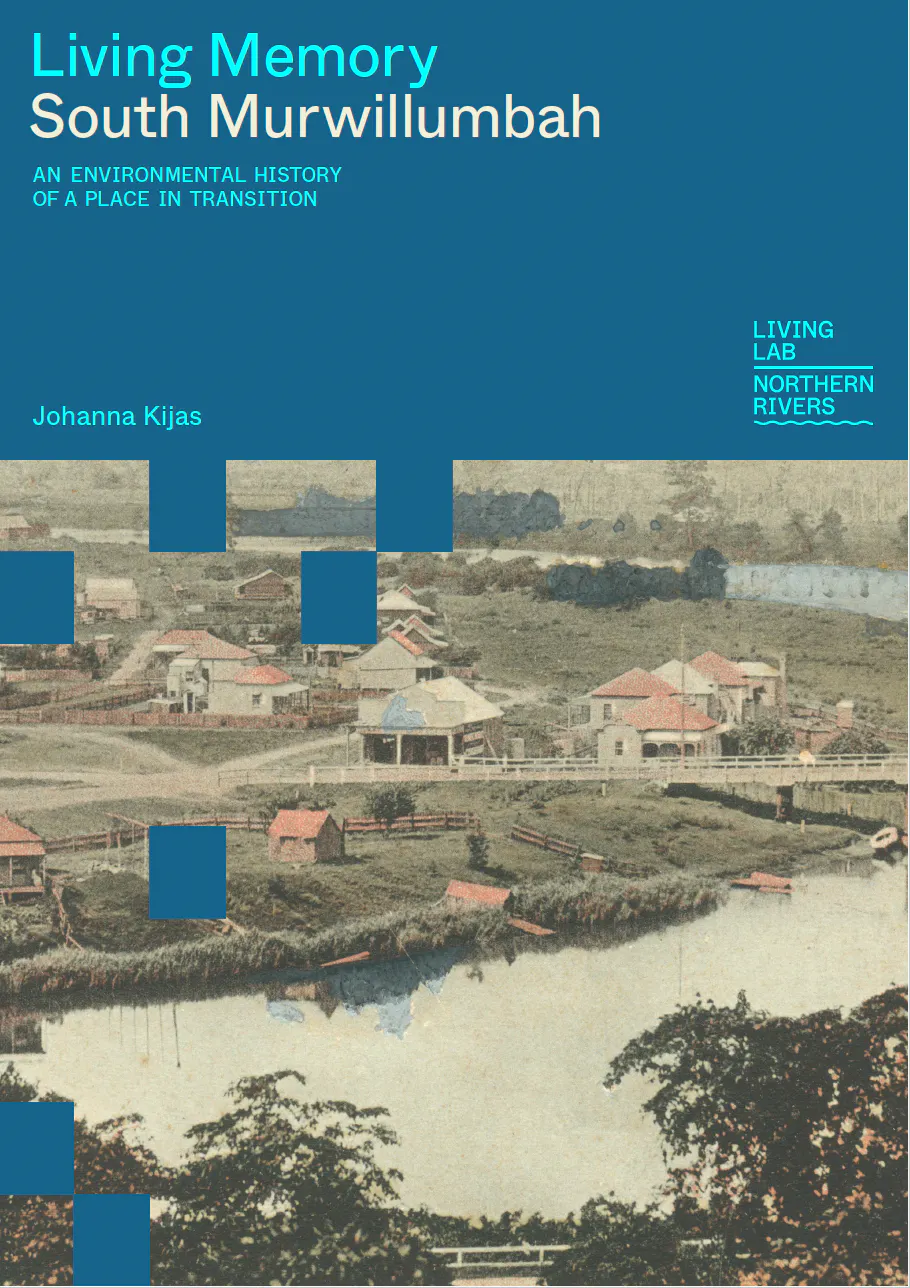
Living Memory South Murwillumbah: An Environmental History of a Place in Transition, researched and written by Dr Johanna Kijas, looks to South Murwillumbah in the Tweed River flood basin to ask what the intertwined histories of people and place can tell us about how we plan for the future.
It has always flooded on the Tweed. But post-colonial land use, community understandings of flooding, and flood memory have varied across generations. European settlement of the South Side expanded during the early decades of the twentieth century and again from the 1980s, coinciding with long-term weather patterns that brought fewer extreme floods. Flood memory receded. When the record floods of 2017 and 2022 arrived, they were larger and faster than any locals had experienced before and residents were not prepared for an event of this scale.
The essay journeys from the banks of the Tweed River to the broad climatic patterns that have historically driven wet and dry times along Australia's eastern seaboard, and back to local streets. Taking a historical lens to flood preparation, Kijas argues, is one significant element in understanding how we plan for climate emergencies into the future.
A suburb in transition
Read our environmental history to learn about the people, floods and long-term weather patterns that have shaped South Murwillumbah.
South Murwillumbah Matters
Throughout February—April 2026, we shared a curated series of historical stories 'South Murwillumbah Matters' through Facebook page It Takes A Town.
The stories are a mix of geographical context, early settlement history, flood records and community stories, and are still available to read. Locals were invited to add to the developing history by sharing their memories, corrections, photographs and observations to build a richer picture of place.
We're producing an edited collection of these stories, and will share it to this page shortly. If you'd prefer us to email this to you, please send your request by email to livinglabnr[at]scu.edu.au
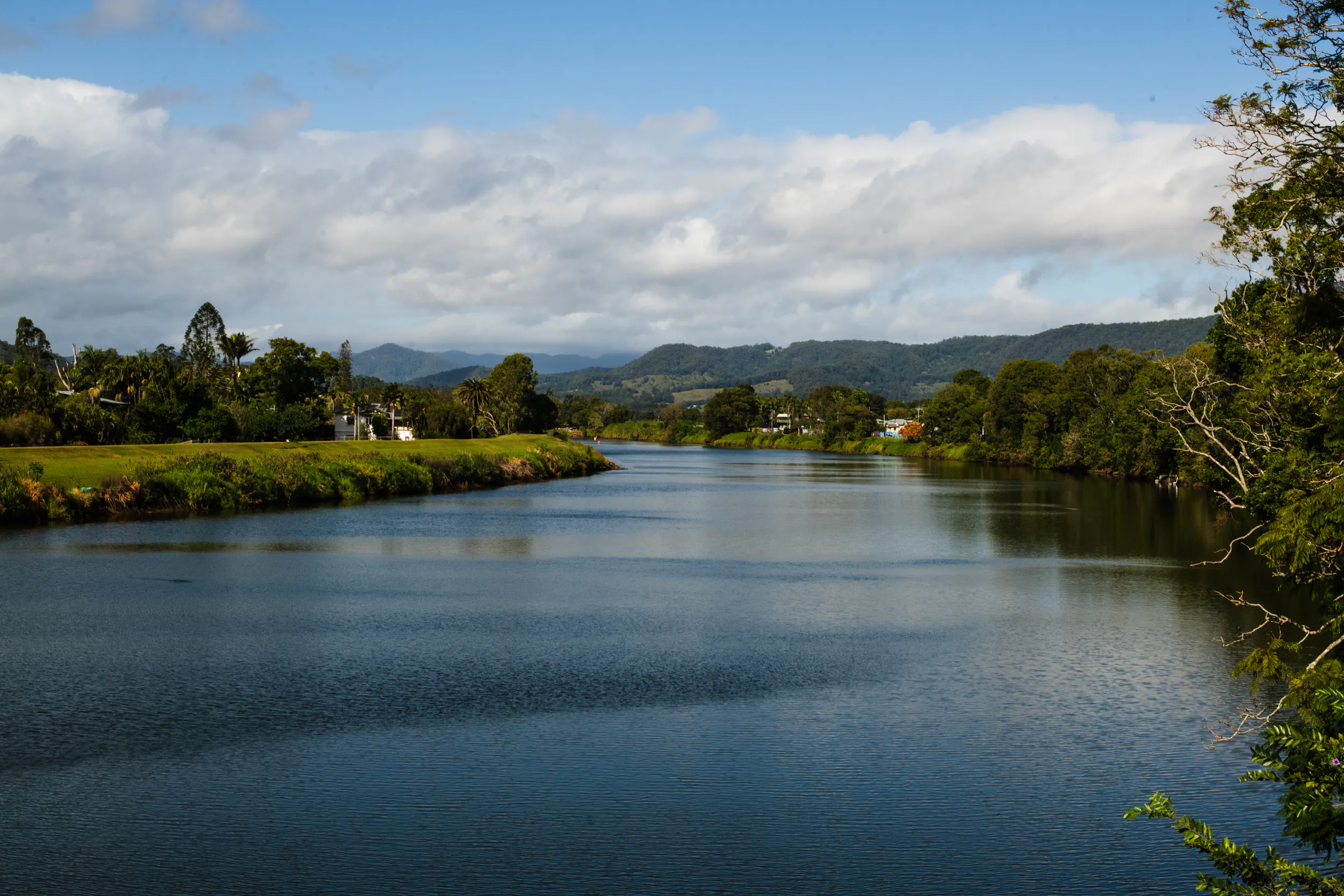
Tweed River, May 2026. Image by Elise Derwin.
Prospero Street portraits
In 1901 a bridge opened at the end of Prospero Street, linking the coastal side of the Tweed River with the growing town of Murwillumbah on its western bank. This opened the way for commercial development in South Murwillumbah, centred on
the street running from the railway station to the river.
Until the mid-twentieth century, everything you needed was available on the South Side. Prospero Street housed butchers, bakers, barbers, a bike shop, a chemist, a doctor, a post office,
a billiards room, a café, car dealerships and a garage. The Regent Theatre was on Alma Street before it burnt down in 1945, and there were two hotels. South Murwillumbah was a bustling urban, commercial and industrial part of Murwillumbah.
Regular flooding was part of life on Prospero Street, something businesses learned to prepare for. However, over the years it became too great a burden for many, some moving across the bridge to the main town. Buildings lay empty. Today the street is often quiet, but a mix of careful flood planning and resilient restorations has brought life back to the street.
Here are just a few stories from today’s Prospero Street community. Some are the people running these businesses now. Others carry the memory of the families who built them.
All portrait photography by Elise Derwin.
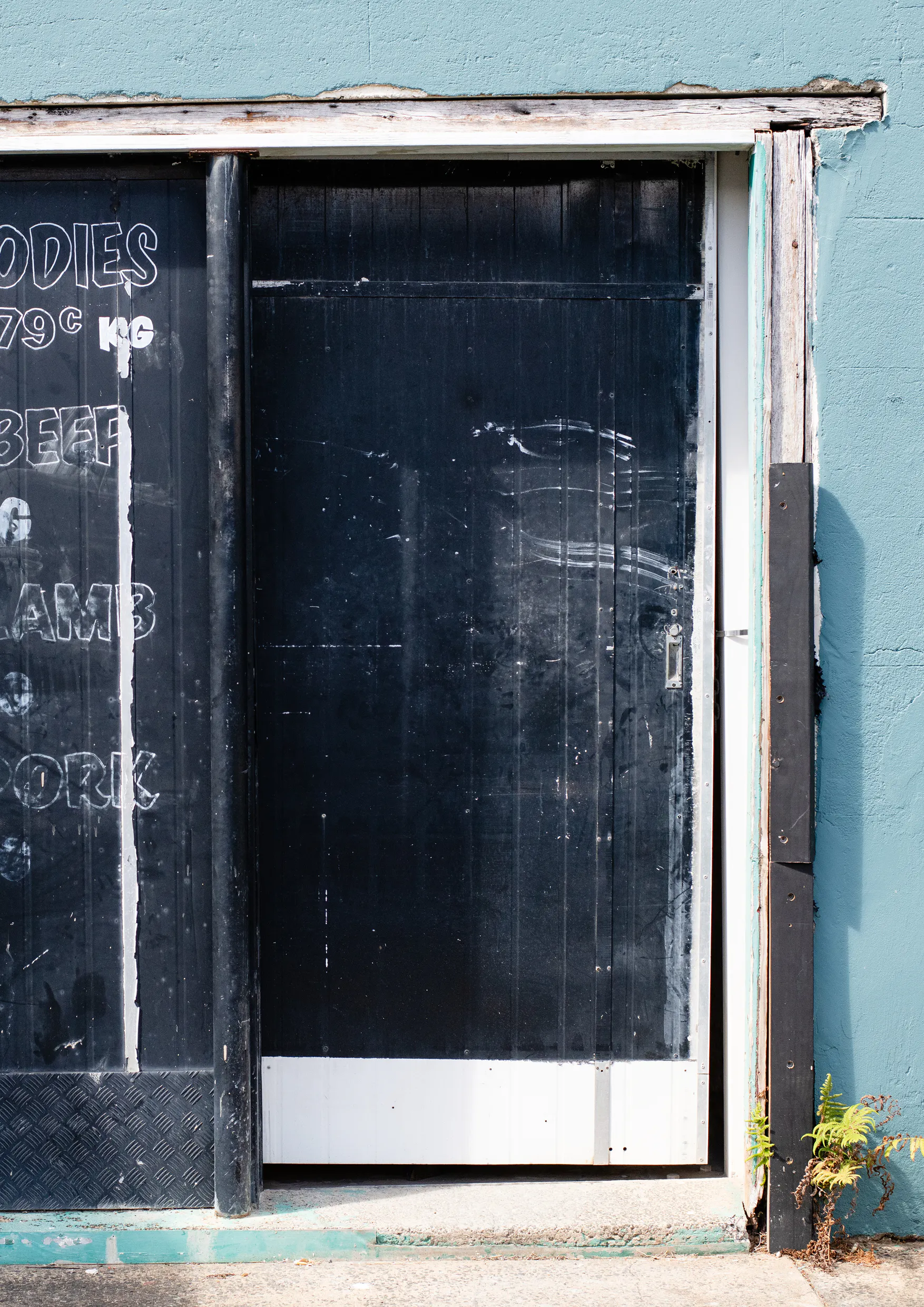
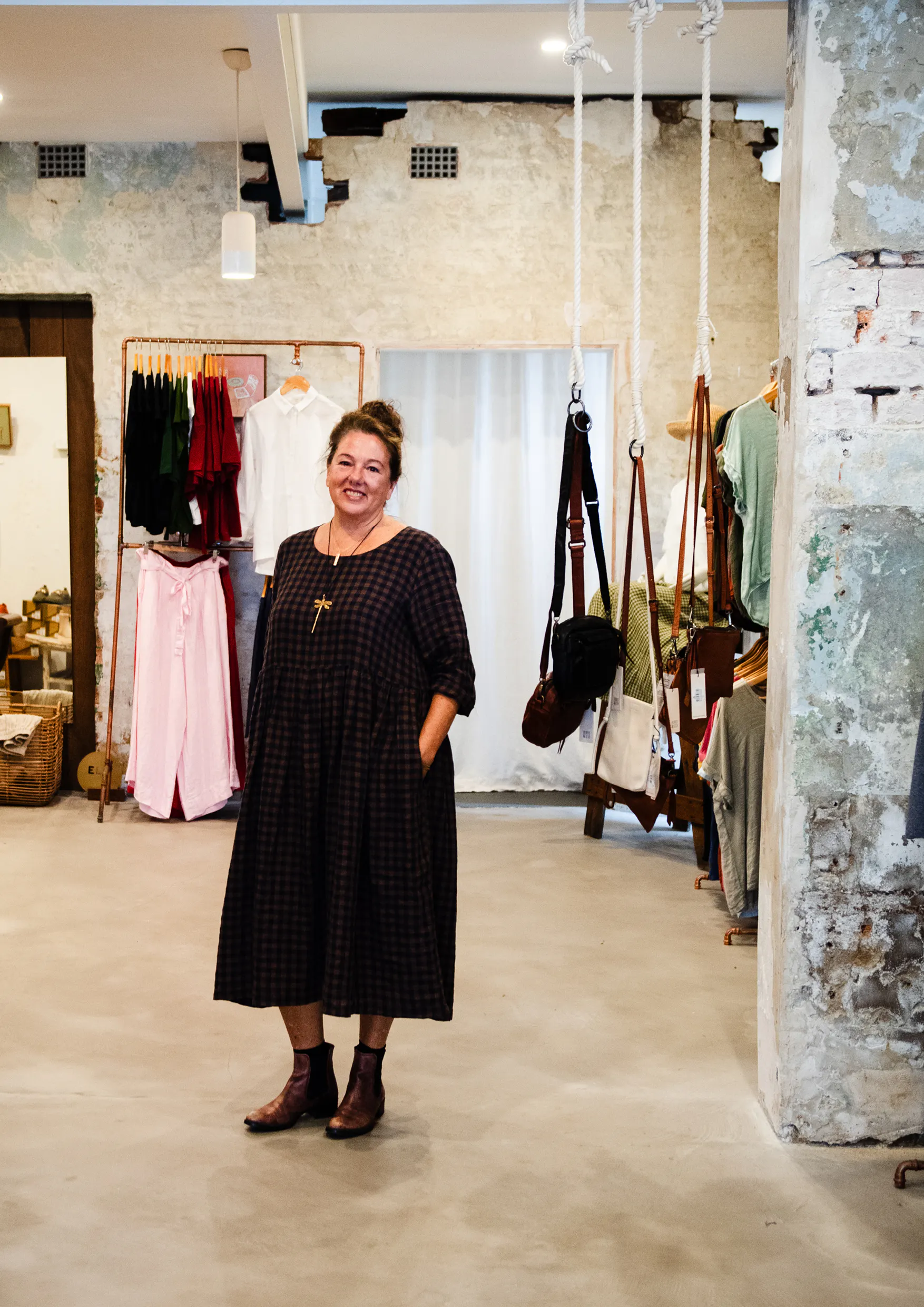
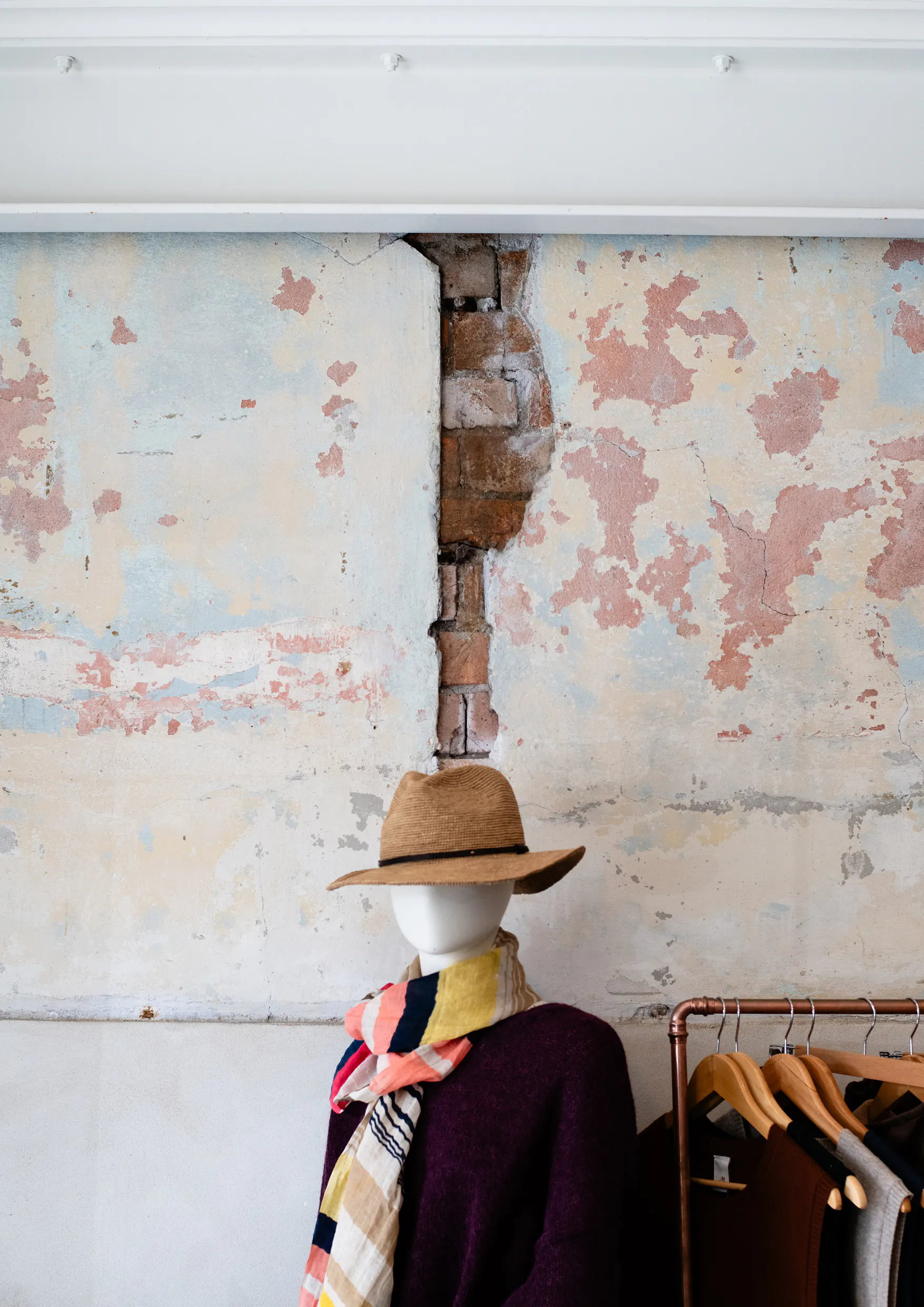
7 Prospero St
Towards the river on the southern side of Prospero Street is Donna’s shop, Echora, at number 7. It was a butcher’s shop for generations, and traces of the building’s life have been preserved and honoured, sections of the wall reveal original brickwork, and the counter is made from salvaged timber.
Donna and her partner bought the building after the 2017 floods, and built a top floor so merchandise could be stored upstairs in future floods. They were partway through building that floor when the 2022 flood hit, and moved everything up just days beforehand. The new floor weathered the flood well.
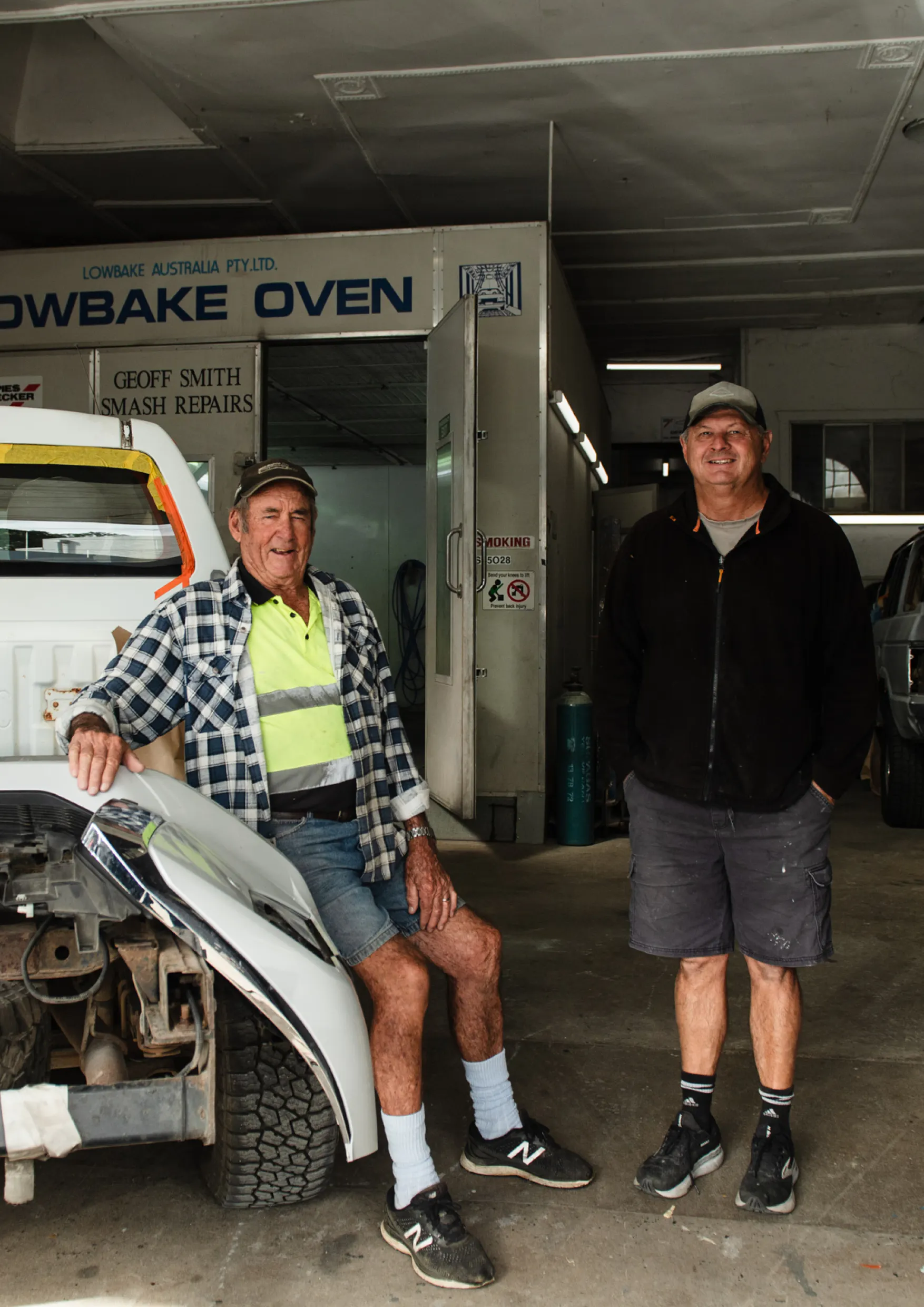
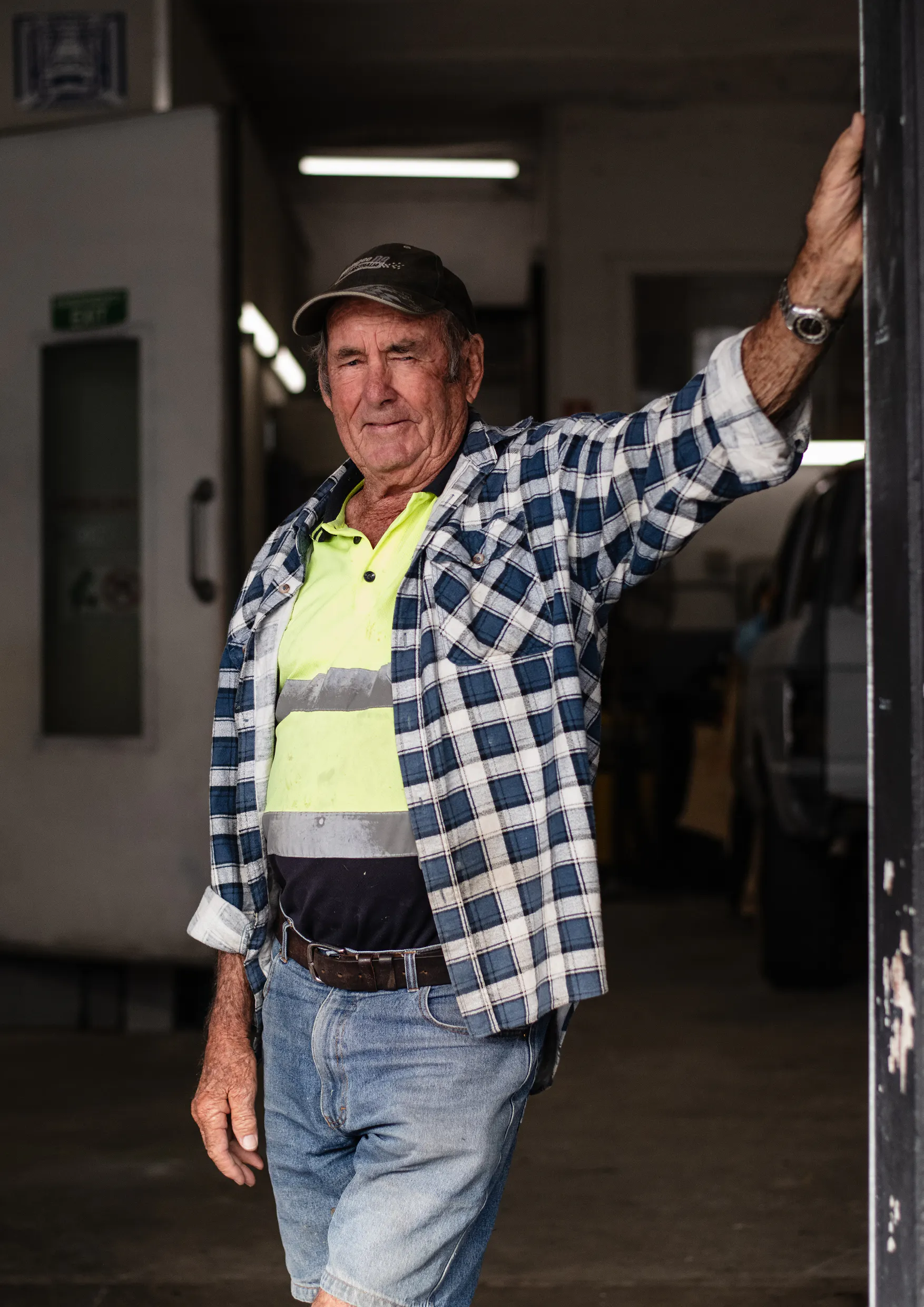
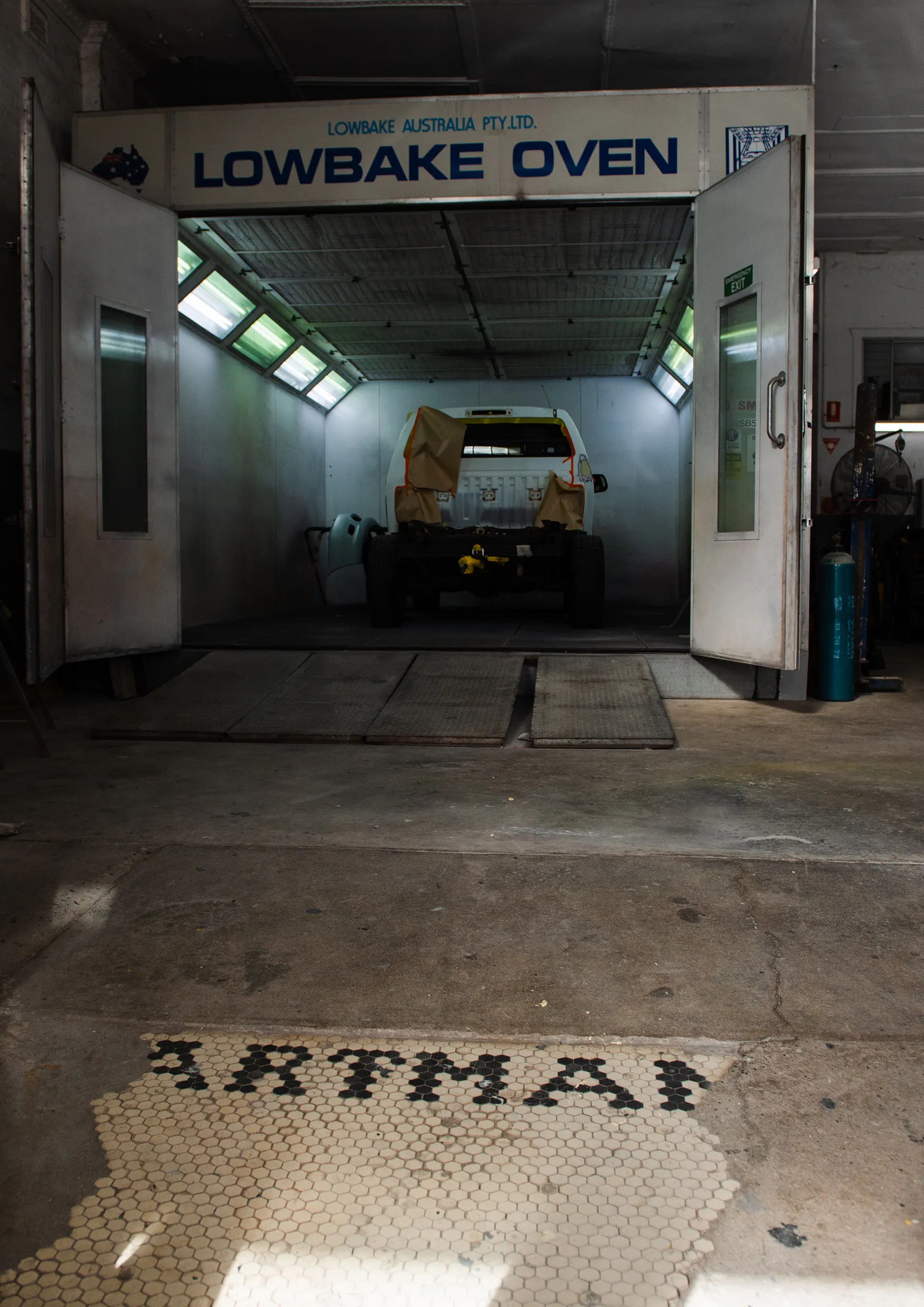
17 Prospero St
Geoff Smith started his panel-beating apprenticeship in 1954, up the street at Ebbott and Fenner’s Holden franchise. He bought 17 Prospero Street in 1968, taking over a building that had once housed Hartmann’s grocery store, and today still works there with his son Murray, who now owns the family business.
Geoff remembers the time it was Hartmann’s well. Standing at the front of today’s building, he describes the can of cash whizzing to the cashier at the back on its zipline and returning with the change.
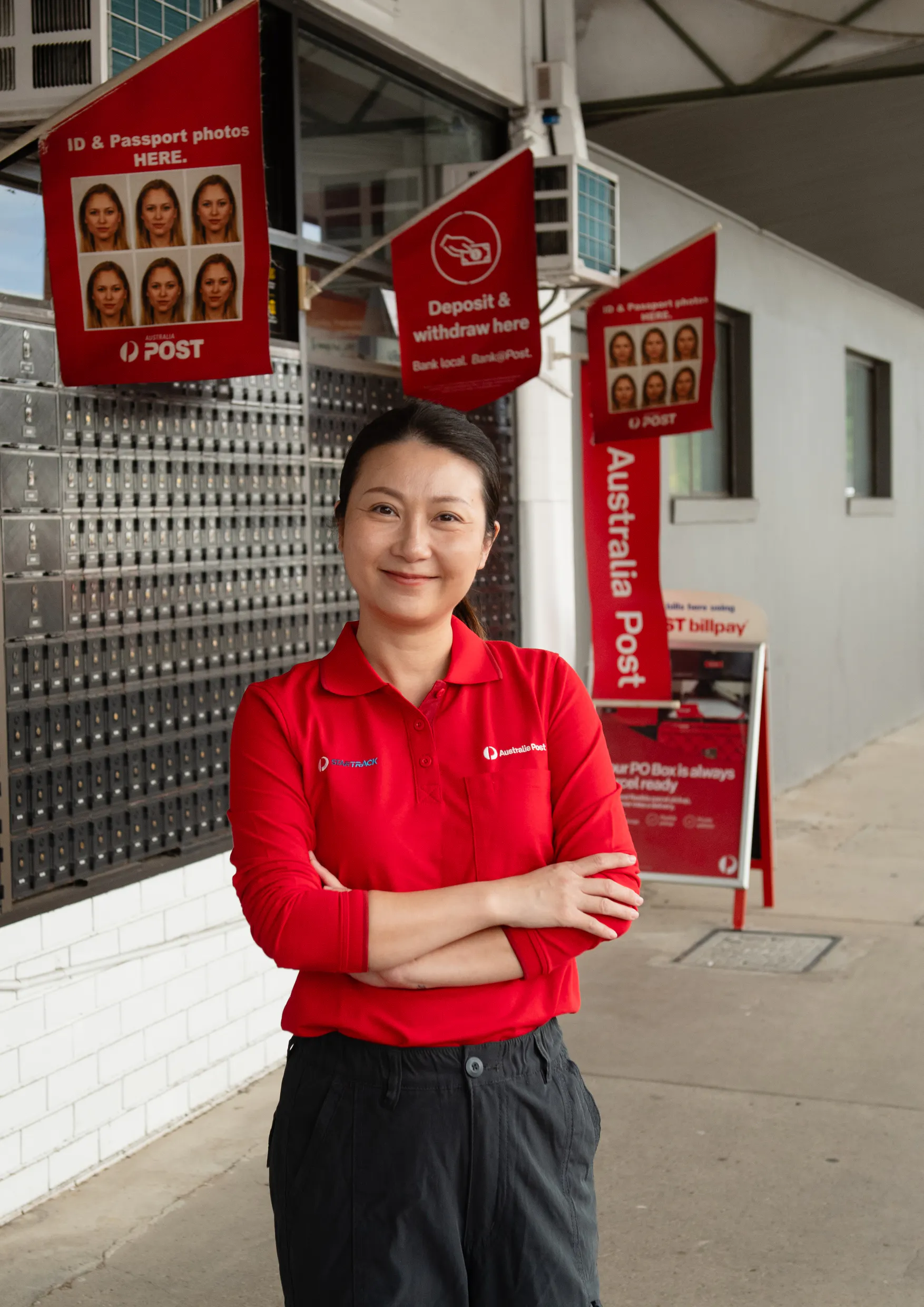
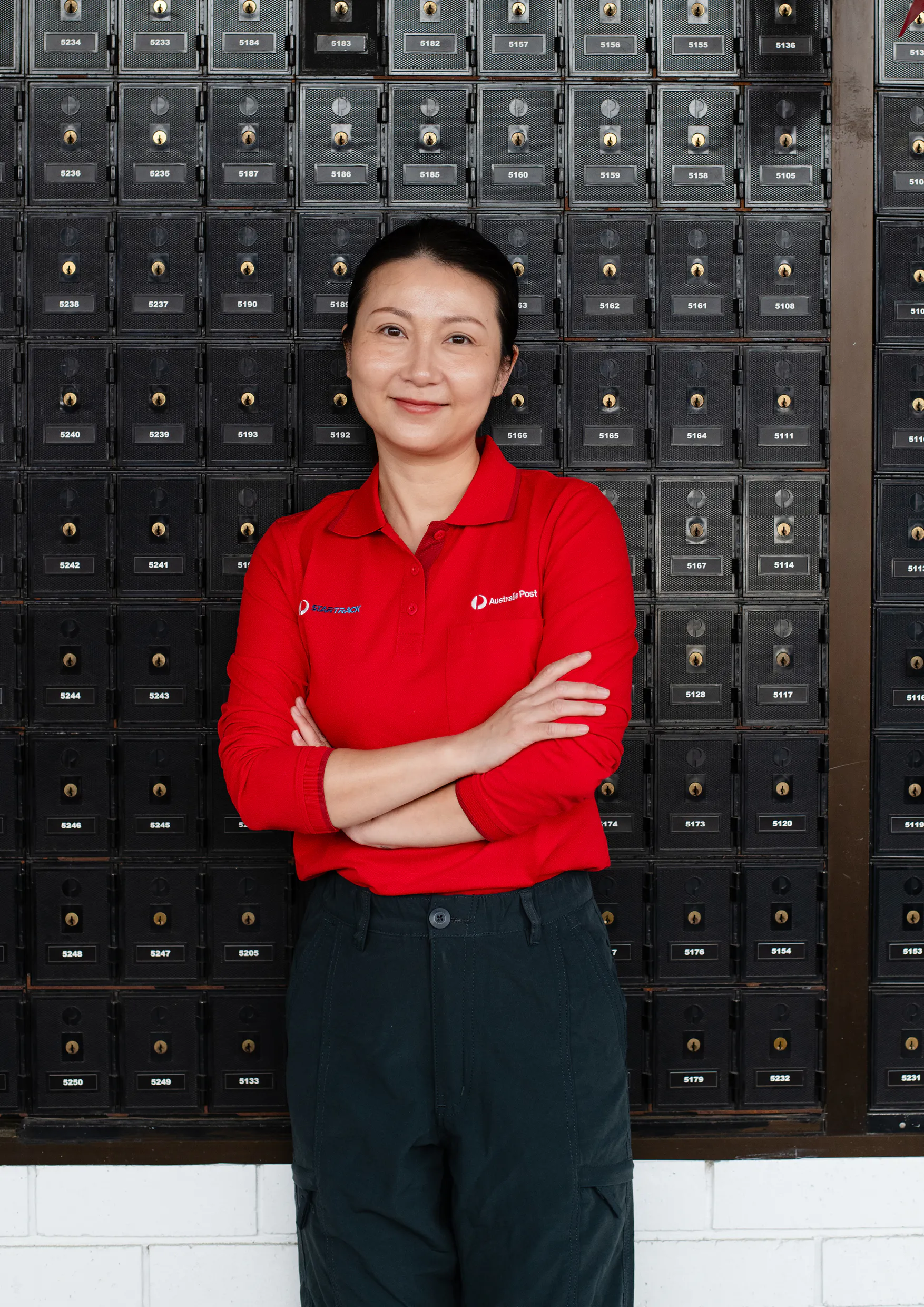
22 Prospero St
Operating from various buildings on Prospero Street since 1914, the post office has been the central hub for the South Side community.
A sign of the times: in 1919, the Daily Observer reported that the South Murwillumbah Post Office was getting money order and banking facilities, due to the South Side “growing at a pace, if anything, advance of the town as a whole.” Over its lifetime, the post office has been a place for polling, for access to a public telephone and a National Service Office. It has even operated out of a barber and tobacconist.
Today the South Murwillumbah Post Office is in the inconspicuous building at number 22, presided over by Mona, who recently stepped into the role that the previous owners performed for many years.
23 Prospero St
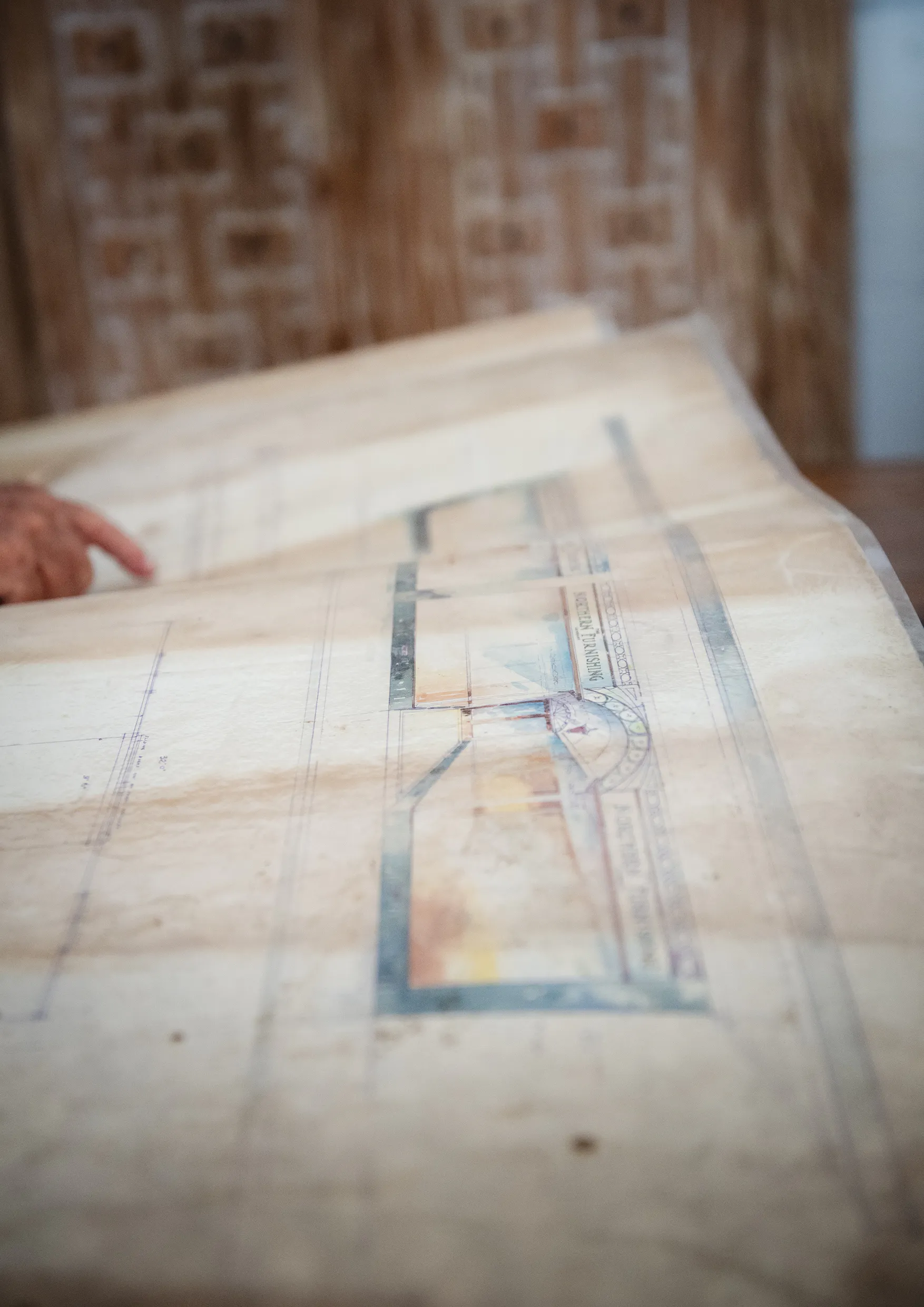
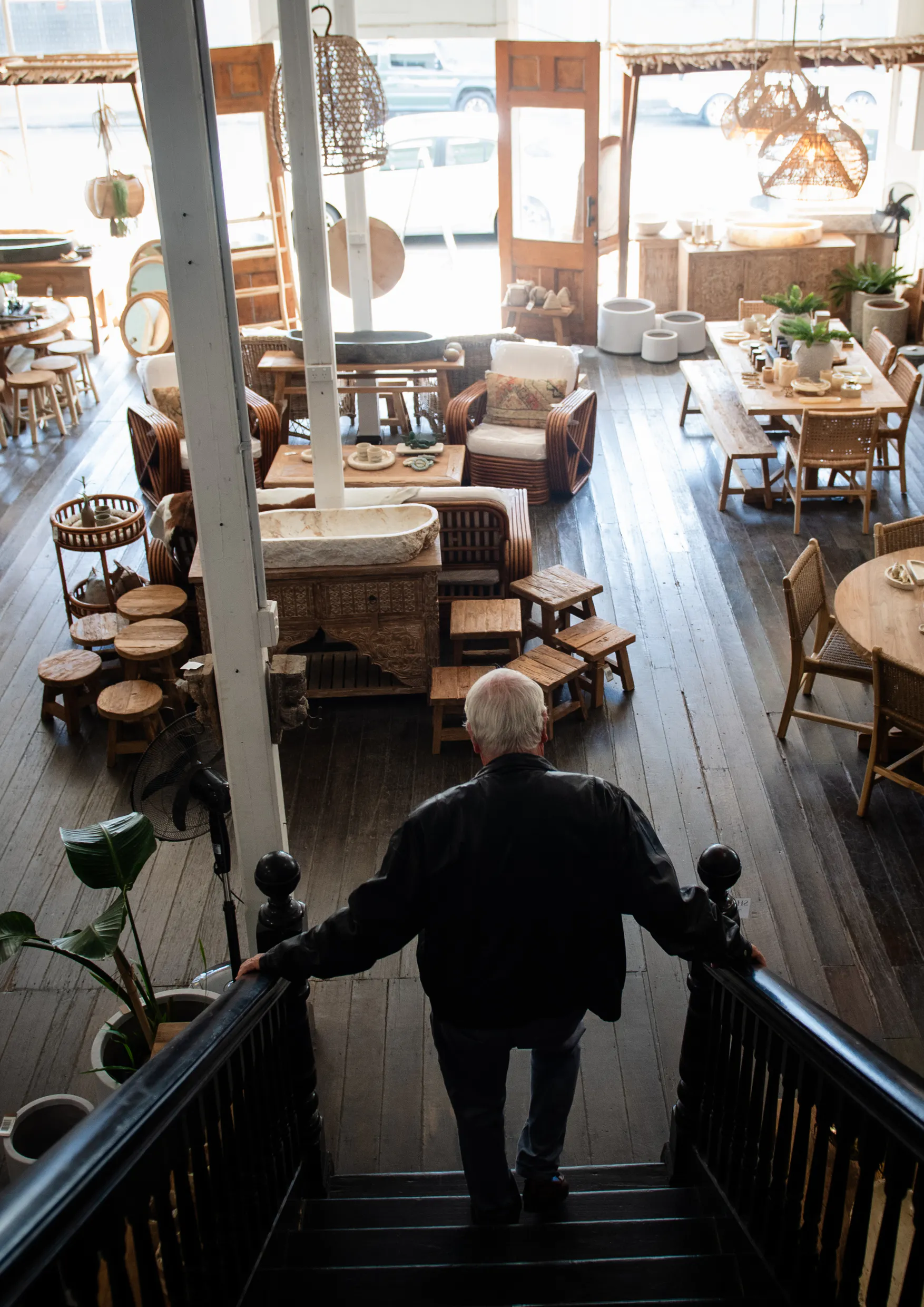
Holston’s Furniture Emporium was built in 1901, starting at number 19 and eventually expanding to include 21, 23, 25 and 27.
Today, Jason’s Paradise Living Co. has given the buildings a second life as a homewares emporium. As a local business owner for some years, Jason knew the damage the 2017 flood had done, and prepared as best he could for 2022. This time was unpredictably worse, to the extent that one of Paradise Living Co.’s timber vanities ended up on the beach at Tweed Heads.
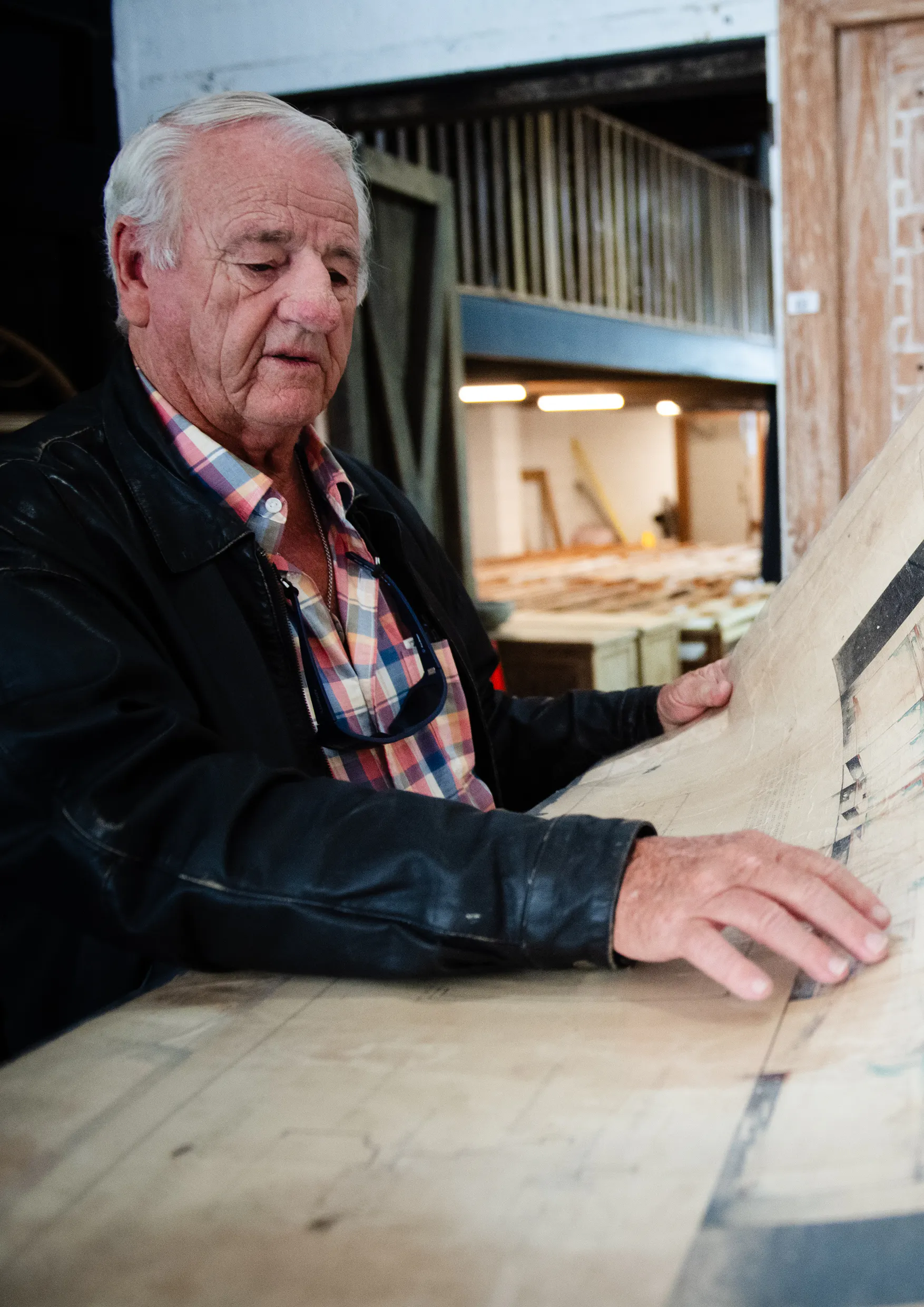
Ian Holston grew up with his family in Stafford Street, behind the store. He remembers family life and the business fondly, the Holston Cup, a local tennis prize, was one tradition fought for among locals. Through Jason, Ian is still uncovering new artefacts today, including a set of original architectural drawings and a beautifully preserved inscription on the inside of the safe door.
Project collaborators
Jo Kijas
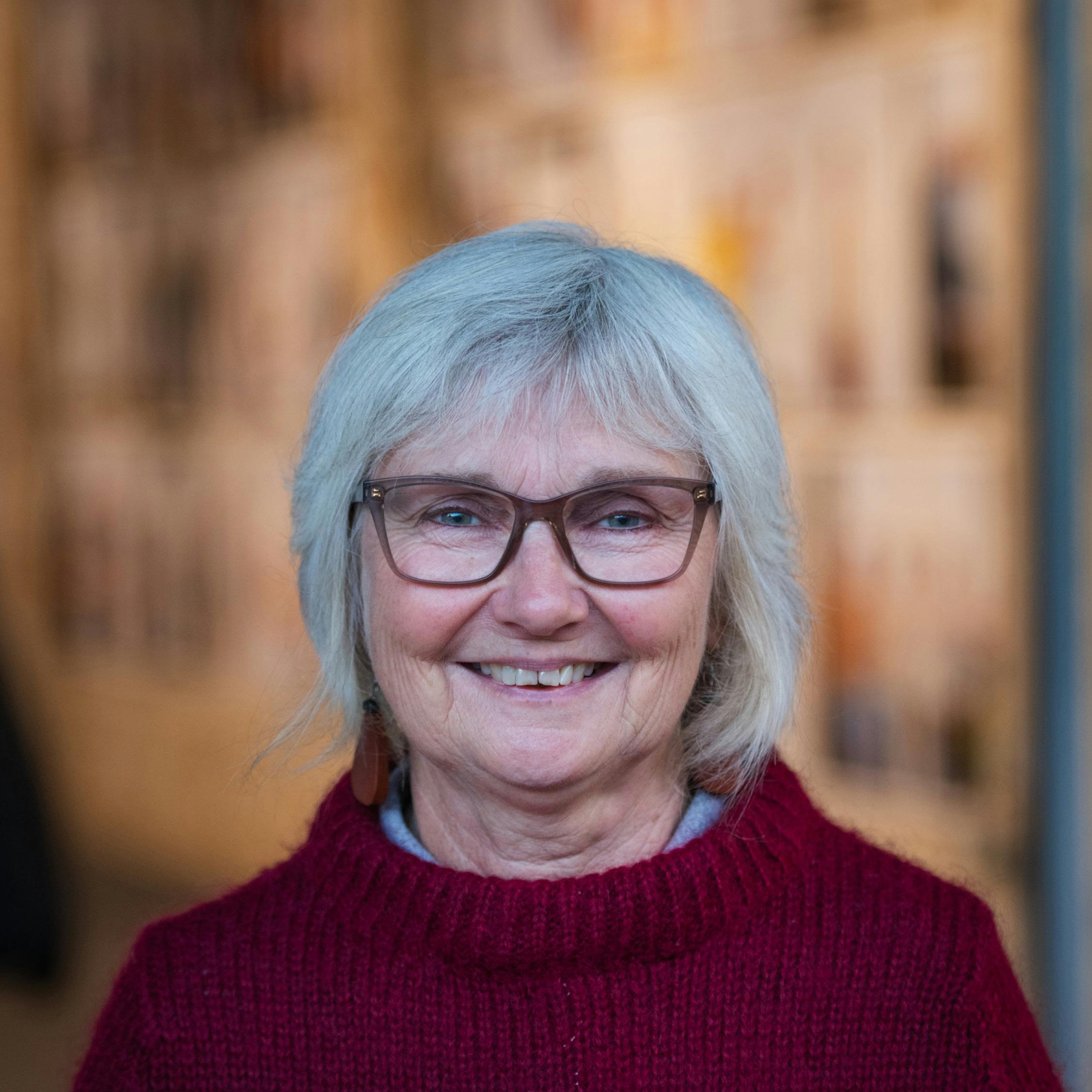
Dr Jo Kijas is a consultant historian and Adjunct Fellow at Southern Cross University, specialising in environmental, community and First Nations history with a focus on oral history practice. She has published widely, including nine commissioned histories and multiple award-winning projects.
Jo runs oral history workshops and has contributed to major heritage initiatives such as Lismore’s Wilson River Experience Walk. Her recent work explores the histories of rivers, wetlands and remnant landscapes across the Far North Coast.
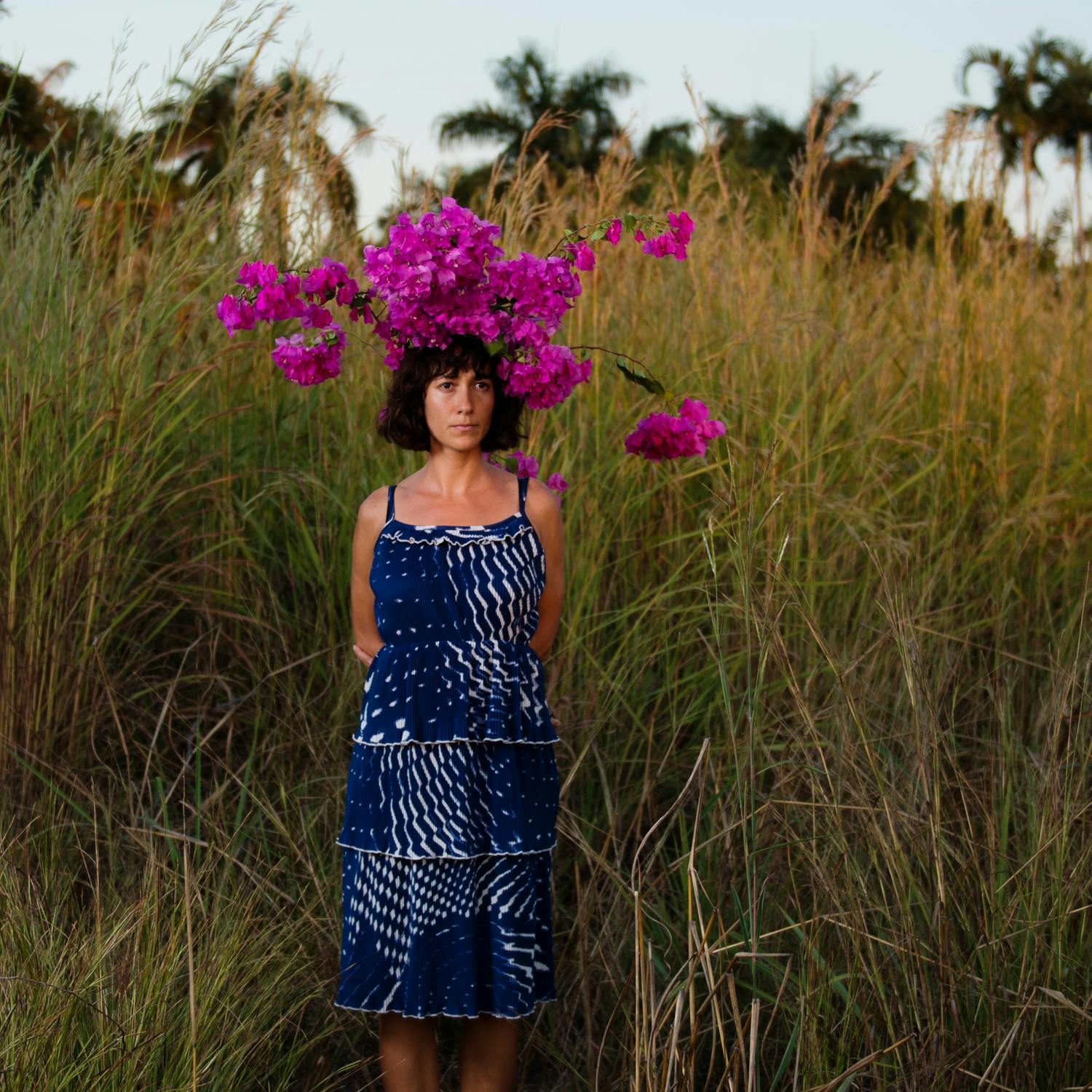
Elise Derwin
Elise is an award-winning photographer based on Bundjalung Country in Lismore, NSW, specialising in documentary and editorial photography.
Her images have featured in the Sydney Morning Herald, The Guardian, The Australian and other major newspapers. Elise has worked extensively across Australia, particularly in the Northern Territory, and completed assignments in the United States, Timor-Leste and Indonesia.
Fuelled by genuine connection to people and places, Elise aims to capture whole stories, not just moments. By taking time to know her subjects, she tells important, often personal stories through images filled with humanity and compassion.
About the Living Memory series
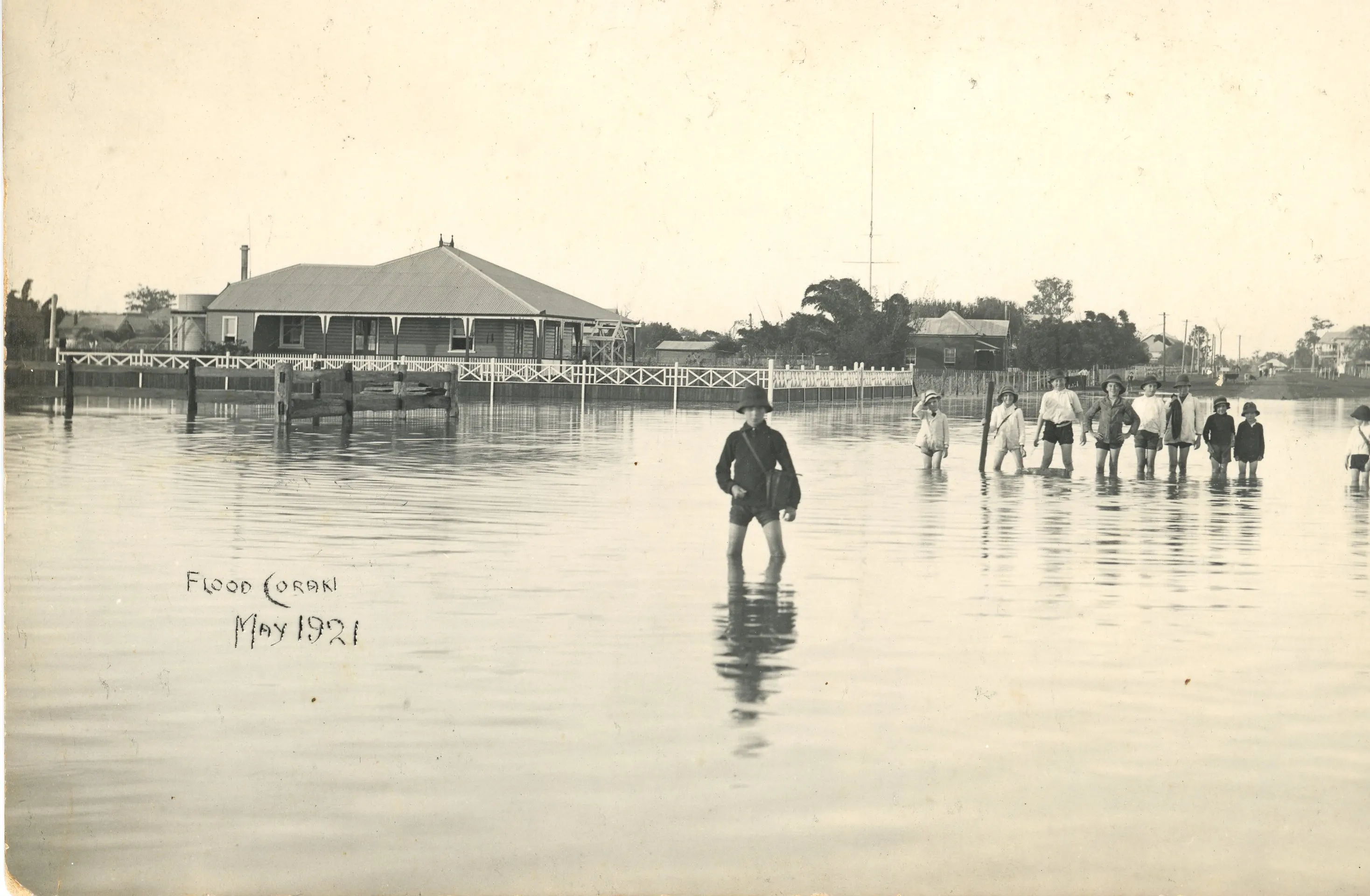
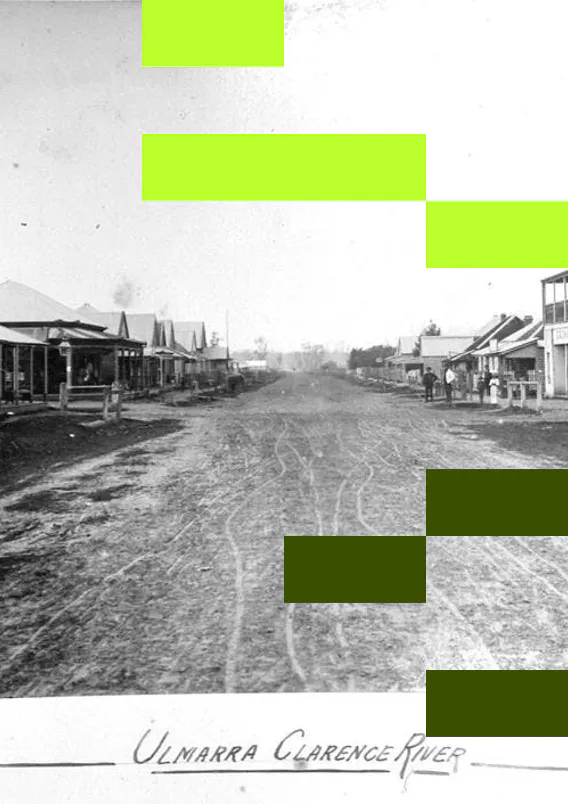
Living Memory South Murwillumbah is designed as a replicable methodology — developed to suit this place and this community, and adaptable to others. Companion projects Living Memory North Lismore, Living Memory Coraki, Living Memory Ulmarra and Living Memory Lower Marshalls Creek apply the same approach in different Northern Rivers communities.
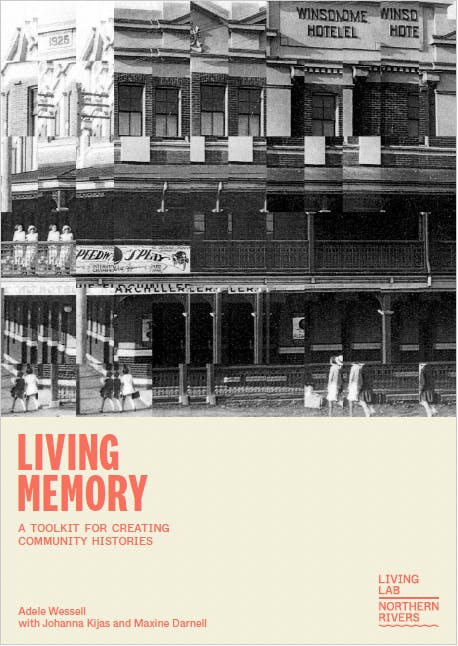
The Living Memory Toolkit
We’ve put together a toolkit for creating community histories. A 70+ page guide developed through this project to support anyone interested in undertaking community history or personal history work.
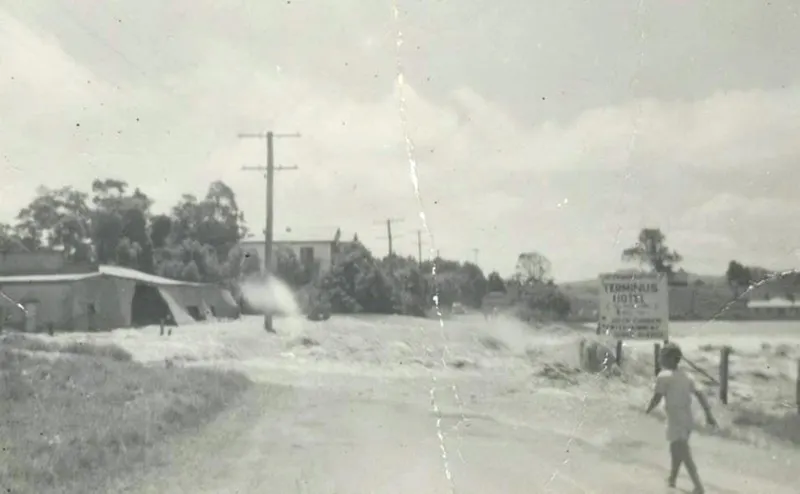
Blacks Drain crossing the highway near Greenhills, 1954. Image courtesy of Tweed Regional Museum.
Acknowledgements
This project was created for and with community members of South Murwillumbah. Thanks to Carmen Stewart and It Takes a Town, the Murwillumbah branch of the Richmond Tweed Regional Library, Tweed Regional Museum, Katrina Semple, Jennifer Booth, Ian Holston, Geoff Smith, Bob Stainlay and Chris Chrisostomos.
Living Memory South Murwillumbah received funding from the Australian Government through the Northern Rivers Recovery and Resilience Program, administered by NSW Reconstruction Authority.
__
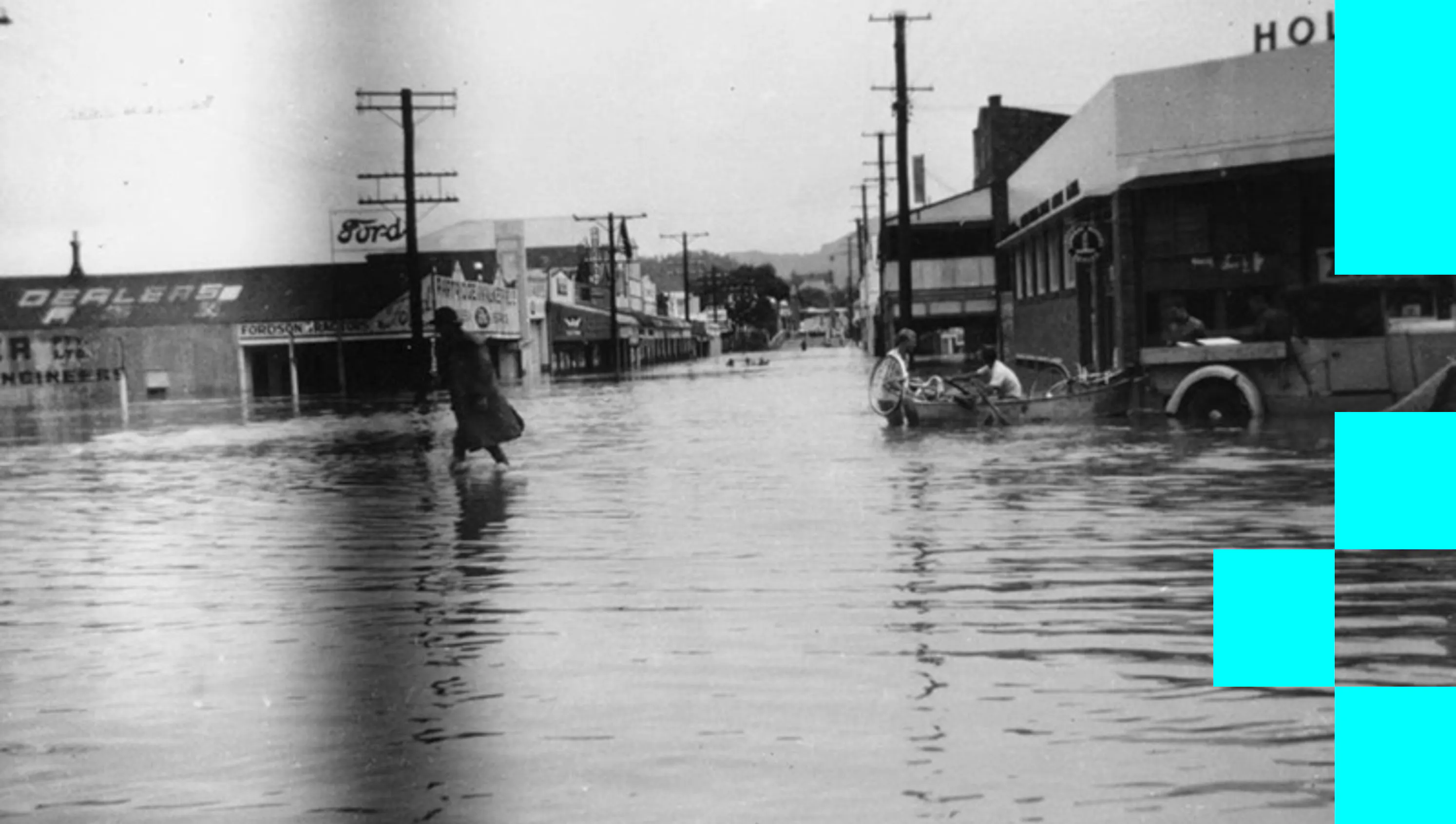
Banner image: The eastern end of Prospero Street, South Murwillumbah in 1954. Image courtesy of Tweed Richmond Museum.