Community-led adaptation planning
Research
When the 2022 NSW Flood Inquiry recommended creating Disaster Adaptation Plans (DAPs) for vulnerable regions across the state, they opened a door to rethink how we plan for future challenges. The Northern Rivers was chosen as the first region to develop a multi-hazard Disaster Adaptation Plan, presenting both an opportunity and a challenge: how do we ensure community values shape these important plans?
We're developing new methods engagement and information design to bridge this gap — ways to gather, measure, and communicate what matters most to communities. Our approach recognises that effective adaptation strategies need more than risk assessments and technical analysis. They must also preserve what people love about where they live.
We'll be supporting the NSW Reconstruction Authority delivery team as they gather diverse data and explore engagement methods crucial for a successful plan. By creating new tools to capture and communicate community values, we're helping ensure the Northern Rivers' first-of-its-kind DAP reflects both expert knowledge and local wisdom.
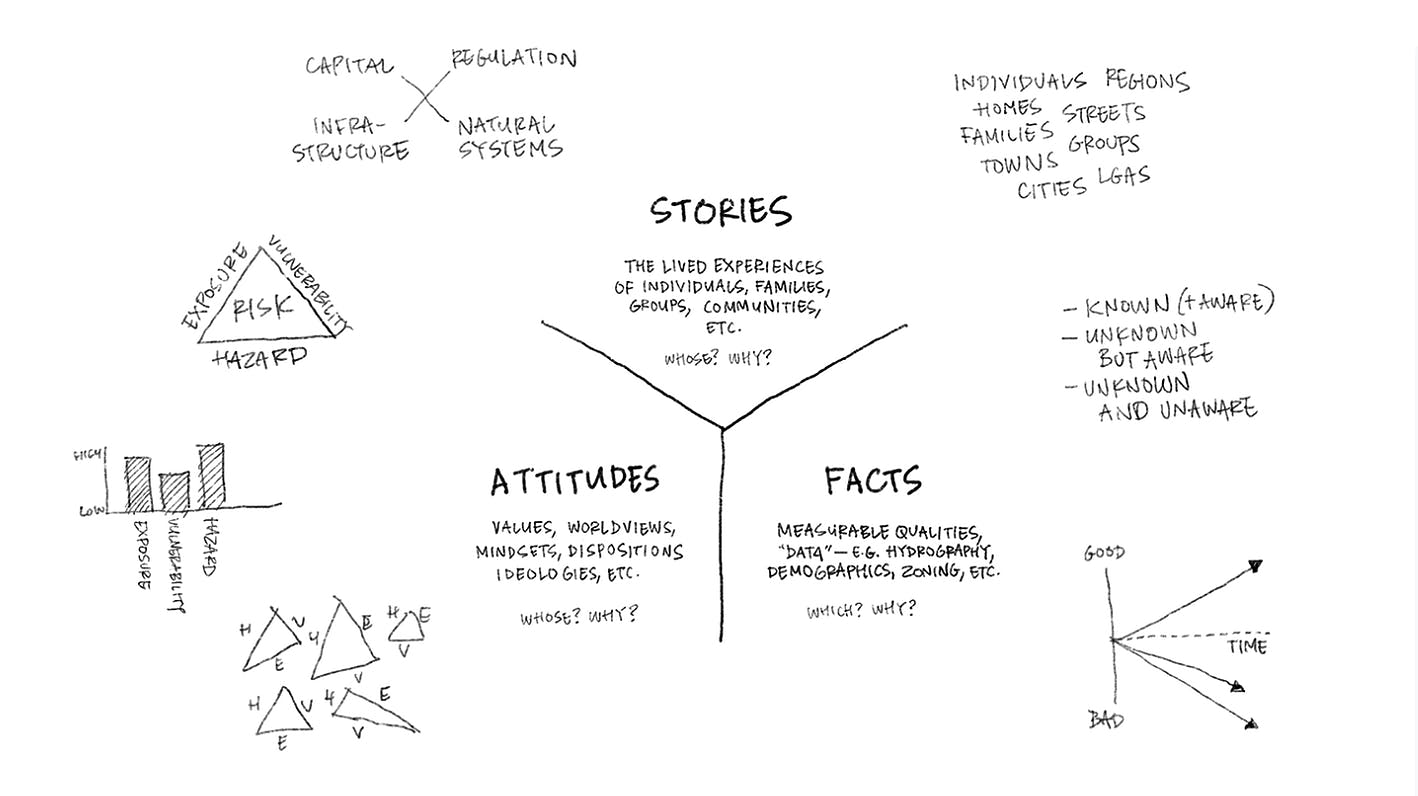
How do you map values? Illustrations by Chris Gaul, Design Director, Parallel Lines. Complex ideas explore by hand, and in collaboration with project team.
This work continues to evolve, but we've contributed in four key areas, each emphasising community engagement in the adaptation planning process.
Social vulnerability indicators
Disaster Adaptation Plans require a deep understanding of how risk exposure to floods, fires, droughts and other hazards is distributed across our communities. We recognise that people's experience of these risks varies greatly based on economic, physical and emotional wellbeing factors. We've researched how other initiatives map social vulnerability and developed a draft framework for the NSW Reconstruction Authority as they create statewide guidelines to ensure this critical data informs the Disaster Adaptation Plan process.
Adaptation stories
Our team has produced eight short videos featuring seven individuals and one organisation exploring what adaptation means to them and the opportunities they see ahead. Meaningful community engagement is essential for our communities to shape the DAPs effectively. These stories aim to spark curiosity about adaptation and encourage conversations among families and community groups before formal engagement begins. The Adaptation Stories will distributed shortly.
Review of engagement methods
Led by Dr Pernille Christensen, we've examined multiple global case studies where communities actively participated in climate change planning – both in response to and in anticipation of disaster events. This research grounds our Disaster Adaptation Plan engagement strategy in global best practice. As we embark on this new planning journey, we're drawing on valuable lessons from communities worldwide.
Mapping community values
While we have established methods for collecting data on physical risk exposure, understanding community values is equally crucial for developing implementable plans. We're collaborating with a team led by Kate Sweetapple at UTS and Chris Gaul of Parallel Lines to explore how values information can strengthen the planning process. Our focus is on effective methods for collecting and analysing this data to benefit both planners and communities. We've developed a prototype values mapping tool and are beginning to gather data across the region to inform the Northern Rivers Disaster Adaptation Plan.